Seniors and Technology: Let’s Be Honest and Not Ageist

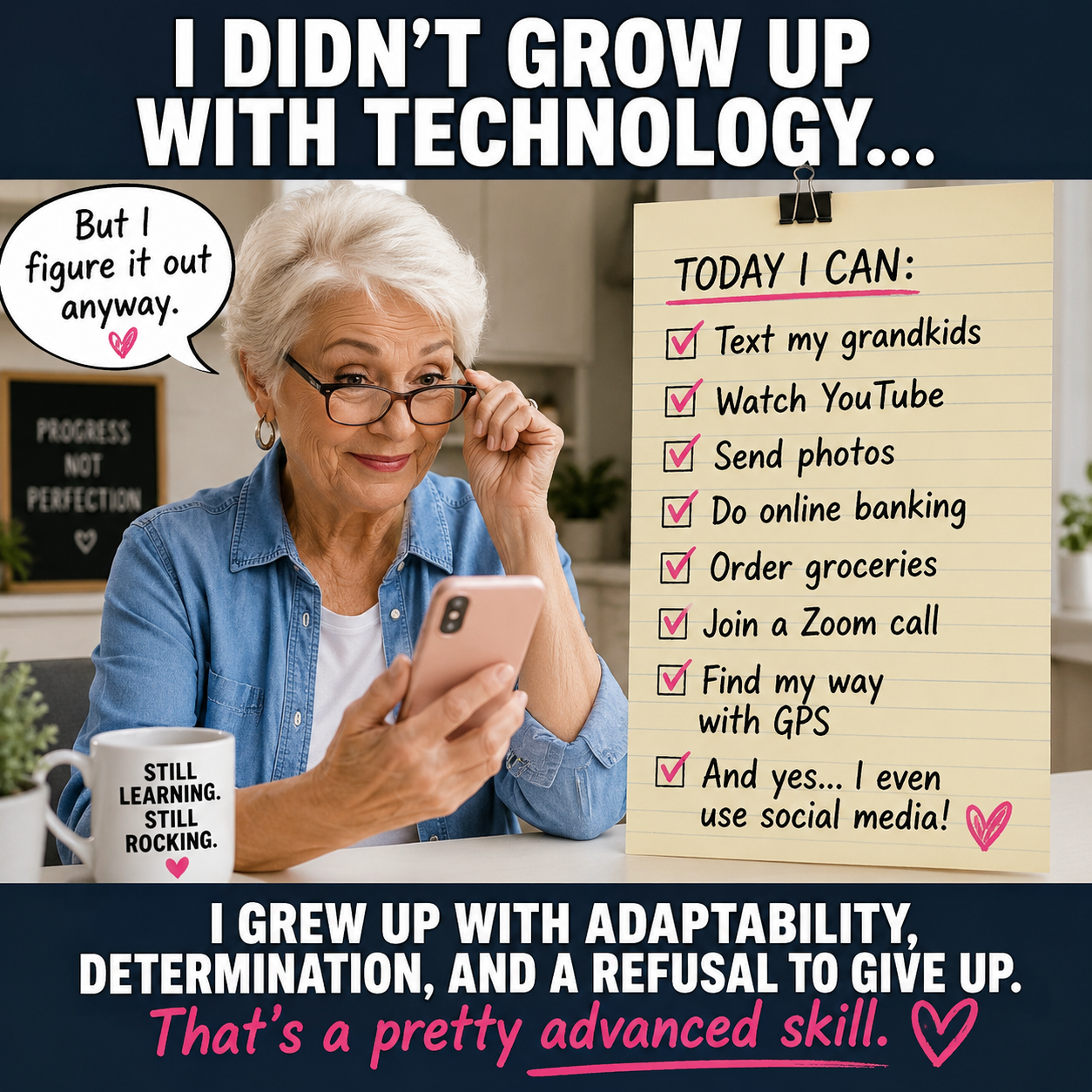
There’s a persistent myth floating around that older adults “just can’t do technology.”

I’d like to respectfully challenge that narrative.

Because from where I sit, millions of older adults are navigating smartphones, patient portals, online banking, streaming services, social media, grocery delivery apps, Zoom calls, digital photos, texting, QR codes, online dating, and passwords that now require approximately one uppercase letter, one symbol, one ancient rune, and the blood of a dragon.

And they’re doing it while the technology changes every six months.

That’s not incompetence.
That’s resilience.

The Numbers May Surprise You

According to recent Pew Research and aging-focused technology studies:

  • Nearly 90% of adults over 65 now use the internet.
  • Most older adults own smartphones.
  • About 72% of adults over 50 use Facebook regularly.
  • YouTube usage among adults 50–64 is now above 80%.
  • Older adults are one of the fastest-growing groups using social media.

Let that sink in for a minute.

The image many people still carry of seniors being “offline” or disconnected is increasingly outdated.

In fact, many older adults are embracing technology not because it’s trendy, but because it helps them:

  • stay connected to family
  • reduce isolation
  • access health care
  • learn new things
  • manage daily life
  • remain independent longer

That matters.
The Problem Often Isn’t Aging. It’s Design.

Now let’s also tell the truth.

Modern technology can be exhausting.

Tiny print.
Constant updates.
Passwords for everything.
Apps talking to other apps.
Pop-ups.
Scams.
Notifications.
Videos autoplaying unexpectedly at full volume in public.

Most younger people get frustrated too. They just happen to have grown up inside the chaos.

Older adults often learned technology in layers:
First desktop computers.
Then email.
Then smartphones.
Then apps.
Then social media.
Then telehealth.
Then QR codes during a pandemic.

That’s a tremendous amount of adaptation in a relatively short period of time.

And frankly, many seniors are not struggling because they are incapable.
They’re struggling because the systems are not designed with aging bodies and brains in mind.

Arthritis makes tiny keyboards harder.
Vision changes make low-contrast screens difficult.
Hearing changes affect phone usage.
Memory changes can make password overload frustrating.
And fear of scams? Completely reasonable.

Many older adults are not afraid of technology itself.
They are afraid of making costly mistakes.

There’s a difference.

Some Myths We Need to Retire

Myth #1: Older adults can’t learn new technology.

False.

The human brain remains capable of learning throughout life. In fact, continued learning and digital engagement may support cognitive health and social connection.

Myth #2: Seniors don’t use social media.

Also false.

Many older adults are highly active on Facebook, YouTube, Pinterest, messaging apps, and increasingly even TikTok.

Some are building businesses.
Some are reconnecting with old friends.
Some are learning recipes, fitness routines, travel hacks, and caregiving strategies.
And some are simply enjoying funny dog videos at 2 a.m. like the rest of us.

Myth #3: Asking for help means failure.

Absolutely not.

Technology is now complicated enough that nearly everyone asks for help sometimes. If you’ve ever called your adult child because “the TV stopped talking to the internet,” welcome to modern life.

A Few Tips That Actually Help

Here are some practical things that can make technology less stressful and more useful for older adults:

1. Make the text bigger

This alone can change everything.

Most phones and tablets allow larger fonts and icons through accessibility settings.

2. Use voice commands

Talking to your device is not lazy. It’s efficient.

You can:

  • send texts
  • set reminders
  • make calls
  • ask questions
  • create grocery lists

without typing tiny letters.

3. Create ONE place for passwords

Whether it’s a secure password manager or a carefully stored notebook, reducing password chaos matters.

4. Turn off unnecessary notifications

Not every app deserves immediate access to your nervous system.

5. Learn one feature at a time

Nobody needs to master everything overnight.

Learn:

  • texting this week
  • photos next week
  • Facebook groups later

Slow learning still counts as learning.

6. Use technology to support independence

Medication reminders.
Grocery delivery.
Telehealth.
Navigation.
Fall alerts.
Video calls.

Technology can help older adults remain independent and connected longer.

The Bigger Conversation

I sometimes think the conversation about seniors and technology says more about society than it does about aging.

We celebrate teenagers for adapting to new apps.
But we underestimate older adults adapting to an entirely transformed world.

Yet many seniors today have lived through:

  • rotary phones
  • typewriters
  • cassette tapes
  • answering machines
  • desktop computers
  • flip phones
  • smartphones
  • AI

That’s astonishing when you think about it.

Aging is not the absence of curiosity.
And growing older does not mean becoming irrelevant in a digital world.

Honestly, some of the wisest people I know are figuring out Facebook while also carrying decades of life experience, resilience, perspective, caregiving, grief, humor, and adaptability.

That seems pretty technologically advanced to me.

And if all else fails?
There is no shame in asking the nearest teenager how to “unmute the thing again.”
Lifespan vs. Healthspan: Why Living Longer Isn’t Enough Anymore

For generations, the goal was simple: live longer. More candles on the birthday cake meant success.

But today, a deeper question is emerging — what kind of life are we living in those extra years?

That’s where the distinction between lifespan and healthspan becomes not just important, but essential.

What Is Lifespan?

Lifespan is the total number of years you live. And by that measure, we’ve made remarkable progress. In the U.S., average life expectancy rose from about 47 years in 1900 to the late 70s today — thanks to advances in medicine, vaccines, sanitation, and public health. That’s genuinely worth celebrating.

But it tells only part of the story.

What Is Healthspan?

Healthspan is the number of years you live in good health — free from serious chronic illness, significant decline, or loss of independence. It’s not just about being alive. It’s about being able to move with ease, think clearly, stay connected, and experience joy and purpose.

In other words: quality of life, not just quantity.

The Gap That Matters

Here’s the hard truth. Research suggests there can be a 10–15 year gap between lifespan and healthspan. That means the final decade or more of many people’s lives is spent managing chronic conditions, mobility challenges, cognitive decline, and increasing dependence.

We’ve extended life — but not always extended vitality.

This gap is one of the most urgent health conversations of our time, and closing it is becoming a personal and collective priority.

Why the Gap Exists

Modern medicine has become extraordinarily good at keeping people alive. But historically, the system hasn’t focused as much on preventing long-term disease early, supporting functional aging, or addressing the lifestyle and environmental factors that quietly shape our health for decades.

The result: longer lives, but not always better ones.

The Shift That’s Changing Everything

Something is moving, though. Among researchers, clinicians, and everyday people, the question is changing — from “How long can we live?” to “How well can we live for as long as possible?”

This is the rise of healthspan science, and it’s built on a few powerful pillars.

Prevention over treatment. Instead of waiting for disease to appear, the focus is shifting to early intervention — monitoring metabolic health, catching risk factors sooner, addressing inflammation before it becomes illness.

Lifestyle as medicine. The data is consistent: what we eat, how we move, how we sleep, how we manage stress, and how connected we feel aren’t lifestyle choices separate from health. They are health.

Functional aging. The goal isn’t just avoiding disease — it’s maintaining strength, balance, cognitive sharpness, and emotional resilience. Staying capable, not just alive.

Social and emotional well-being. Loneliness and isolation are now linked to significantly poorer health outcomes, especially in older adults. Relationships, purpose, and community aren’t extras. They’re essential.

What This Means for You — Right Now

The most empowering part of this conversation? Many of the factors that influence healthspan are within our reach. Not perfectly. Not always easily. But meaningfully.

The question worth asking isn’t “How long will I live?” It’s “How long can I stay well, engaged, and fully myself?”

That shift changes everything.

The Bottom Line

The future of aging isn’t just longer lives. It’s better lives — lived fully for as long as possible. Because most of us don’t just want more time.

We want more good days. More independence. More connection. More moments that actually feel like living.

Longevity is a gift. Healthspan is how we experience it. And the closer those two align, the richer our lives become.


What does “aging well” look like to you? Share in the comments — I’d love to hear.

Are you sick of picking up all the things you drop or just can’t stretch to reach that peanut butter jar? Me too! Here is something to try – (Amazon link- may earn a small commission) https://amzn.to/4d9M8xX

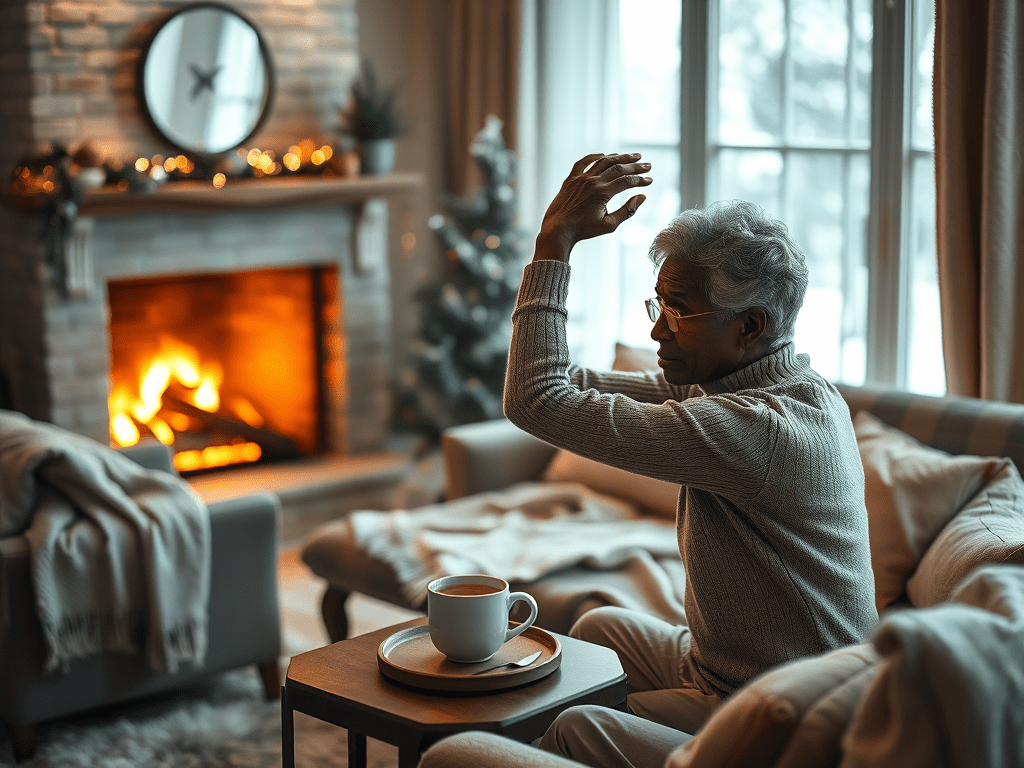
Aging Softly in a Hard Freeze: A Love Letter to Winter, Wobbling Knees, and the Fine Art of “Oof” (Now With Survival Tips)

There was a time—not that long ago, but also somehow several lifetimes ago—when winter meant sledding hills, snowball fights, and dramatically underestimating how cold “32 degrees” actually is.

Now?

Winter means checking the weather app like it personally offended you and negotiating with your joints before standing up.

“Alright knees, let’s do this gently. Nobody needs to rush. We’re not being chased.”


The Soundtrack of Aging: Snap, Crackle, Oh My Back

There’s a new soundtrack that comes with aging softly. It’s subtle. It’s intimate. It’s… alarming.

It sounds like:

  • A knee that clicks like a pen every time you stand up
  • A shoulder that whispers “you’ve made poor choices” when you reach for a coat
  • And that mysterious full-body “oof” that escapes when sitting down… or standing up… or thinking about either

Winter, of course, turns the volume all the way up.

Cold weather doesn’t just visit your joints—it moves in, rearranges the furniture, and refuses to pay rent.


Gentle Tip #1: Warm First, Move Second

Before you do anything ambitious—like walking to the kitchen—warm up your body like you’re about to perform a small ballet for your coffee mug.

Try this:

  • Roll your shoulders slowly
  • Wiggle your ankles like you’re testing if they still belong to you
  • Do a few gentle stretches before standing

Even 2–3 minutes helps your joints say,
“Okay… we’ll cooperate. But we’re watching you.”

Bonus points for:

  • A heating pad
  • A warm shower in the morning
  • Or dramatically wrapping yourself in a blanket like royalty

Dressing for Winter: A Strategic Operation

There was a time when getting dressed meant fashion.

Now it’s more like:

  • “Will this keep my lower back from staging a protest?”
  • “Can I bend in this without needing emotional support?”
  • “Is this outfit warm enough that my hip won’t file a formal complaint?”

Layering isn’t just a style anymore. It’s a survival strategy.

Socks? Two pairs.
Sweater? Yes.
Heating pad? Also yes.
Dignity? Optional.


Gentle Tip #2: Dress Like You Love Yourself

This is your permission slip to:

  • Choose comfort over cute (you’ve earned it)
  • Invest in good shoes with support (your knees are begging)
  • Keep a “warm kit” nearby—blanket, socks, tea, heating pad

Also:
If it zips, stretches, or feels like pajamas?
It is now considered fashion-forward self-care.


The Slow Art of Moving Like You Mean It

Aging softly teaches you something important: speed is overrated.

You don’t rush anymore. You approach movement.

  • You don’t jump out of bed—you transition thoughtfully
  • You don’t bend—you negotiate with gravity
  • You don’t shovel snow—you reconsider your life choices entirely

Gentle Tip #3: Motion is Lotion (Annoying but True)

The last thing you want to do when you’re stiff… is move.

Unfortunately, your body strongly disagrees.

Try:

  • Short walks (even around the house counts)
  • Gentle stretching during TV time
  • Chair yoga or slow movement routines

Think of it less as “exercise” and more as
“convincing your joints not to unionize.”


Winter Walks: A Risk Assessment

Taking a walk in winter used to be refreshing.

Now it’s a full risk analysis.

You stand at the door thinking:

  • “Is that ice or just… shiny danger?”
  • “Do I have the right boots, or am I about to star in a viral video?”
  • “If I fall, how long will I lay there before I just accept my new outdoor life?”

And yet… you go anyway.

Because despite the cold, despite the ache…

There’s something quietly beautiful about it.


Gentle Tip #4: Stability is Sexy Now

Let’s normalize:

  • Shoes with real traction
  • Holding onto railings like they’re your best friend
  • Taking small, deliberate steps (penguin chic)

Also consider:

  • Ice cleats for shoes
  • A walking stick or cane if needed
  • Good outdoor lighting

Confidence is great.
Not falling is better.


The Unexpected Gift of Slowing Down

Here’s the part nobody tells you:

Aging softly—especially in winter—isn’t just about aches and creaks.

It’s about attention.

You notice things more:

  • The way the light hits snow in the morning
  • The quiet stillness that only winter brings
  • The small victories, like getting up without making a sound (rare, but thrilling)

Gentle Tip #5: Feed Your Body Like It’s On Your Side

Winter self-care isn’t just external—it’s internal.

Support your joints and energy with:

  • Warm, nourishing meals (soups = emotional support in a bowl)
  • Staying hydrated (yes, even when you’re not sweating)
  • Omega-3s, vitamin D, and anti-inflammatory foods

And let’s be honest:
A hot cup of tea solves at least 40% of winter problems.

The other 60%? Still under review.


Final Thoughts from the Heating Pad

If you’re aging softly this winter, here’s your reminder:

You are not falling apart.
You are… evolving into a more acoustically expressive version of yourself.

You are learning:

  • How to listen to your body
  • How to move with intention
  • How to care for yourself in ways you once ignored

And maybe most importantly…

How to laugh through it.

Because yes—your knee sounds like stepping on a bag of chips.

But you’re still here. Still moving. Still figuring it out.


Now tell me—what’s your go-to winter survival move: heating pad, hot tea, or just refusing to go outside until April? 😄