Lifespan vs. Healthspan: Why Living Longer Isn’t Enough Anymore

For generations, the goal was simple: live longer. More candles on the birthday cake meant success.

But today, a deeper question is emerging — what kind of life are we living in those extra years?

That’s where the distinction between lifespan and healthspan becomes not just important, but essential.

What Is Lifespan?

Lifespan is the total number of years you live. And by that measure, we’ve made remarkable progress. In the U.S., average life expectancy rose from about 47 years in 1900 to the late 70s today — thanks to advances in medicine, vaccines, sanitation, and public health. That’s genuinely worth celebrating.

But it tells only part of the story.

What Is Healthspan?

Healthspan is the number of years you live in good health — free from serious chronic illness, significant decline, or loss of independence. It’s not just about being alive. It’s about being able to move with ease, think clearly, stay connected, and experience joy and purpose.

In other words: quality of life, not just quantity.

The Gap That Matters

Here’s the hard truth. Research suggests there can be a 10–15 year gap between lifespan and healthspan. That means the final decade or more of many people’s lives is spent managing chronic conditions, mobility challenges, cognitive decline, and increasing dependence.

We’ve extended life — but not always extended vitality.

This gap is one of the most urgent health conversations of our time, and closing it is becoming a personal and collective priority.

Why the Gap Exists

Modern medicine has become extraordinarily good at keeping people alive. But historically, the system hasn’t focused as much on preventing long-term disease early, supporting functional aging, or addressing the lifestyle and environmental factors that quietly shape our health for decades.

The result: longer lives, but not always better ones.

The Shift That’s Changing Everything

Something is moving, though. Among researchers, clinicians, and everyday people, the question is changing — from “How long can we live?” to “How well can we live for as long as possible?”

This is the rise of healthspan science, and it’s built on a few powerful pillars.

Prevention over treatment. Instead of waiting for disease to appear, the focus is shifting to early intervention — monitoring metabolic health, catching risk factors sooner, addressing inflammation before it becomes illness.

Lifestyle as medicine. The data is consistent: what we eat, how we move, how we sleep, how we manage stress, and how connected we feel aren’t lifestyle choices separate from health. They are health.

Functional aging. The goal isn’t just avoiding disease — it’s maintaining strength, balance, cognitive sharpness, and emotional resilience. Staying capable, not just alive.

Social and emotional well-being. Loneliness and isolation are now linked to significantly poorer health outcomes, especially in older adults. Relationships, purpose, and community aren’t extras. They’re essential.

What This Means for You — Right Now

The most empowering part of this conversation? Many of the factors that influence healthspan are within our reach. Not perfectly. Not always easily. But meaningfully.

The question worth asking isn’t “How long will I live?” It’s “How long can I stay well, engaged, and fully myself?”

That shift changes everything.

The Bottom Line

The future of aging isn’t just longer lives. It’s better lives — lived fully for as long as possible. Because most of us don’t just want more time.

We want more good days. More independence. More connection. More moments that actually feel like living.

Longevity is a gift. Healthspan is how we experience it. And the closer those two align, the richer our lives become.


What does “aging well” look like to you? Share in the comments — I’d love to hear.
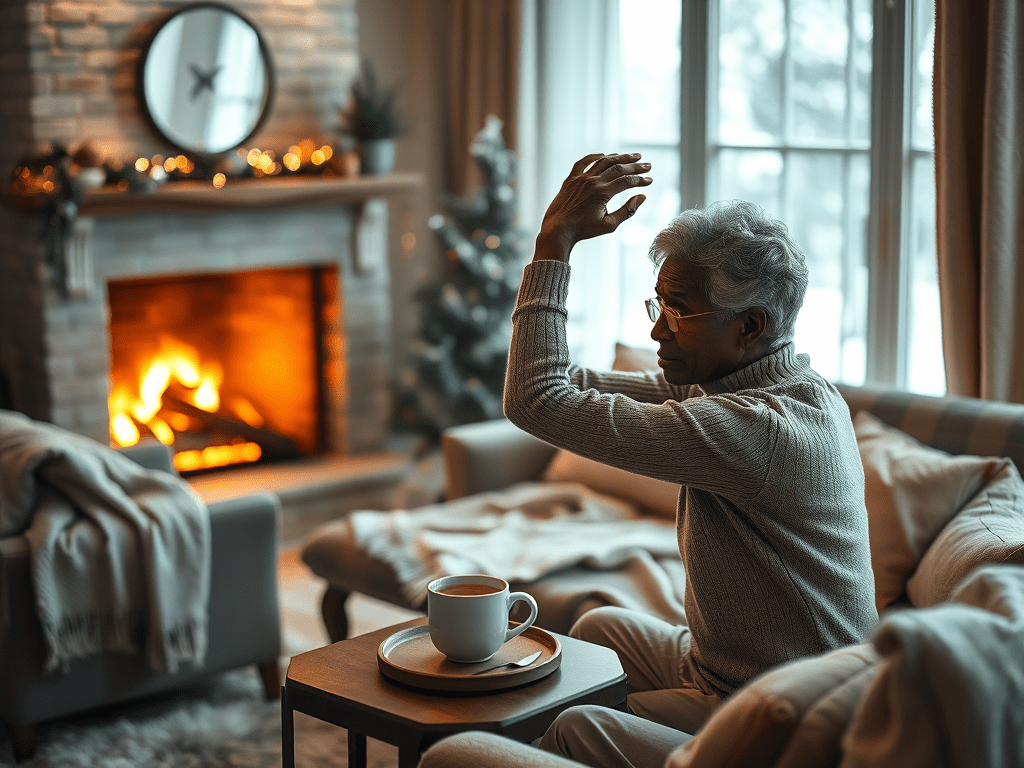
Aging Softly in a Hard Freeze: A Love Letter to Winter, Wobbling Knees, and the Fine Art of “Oof” (Now With Survival Tips)

There was a time—not that long ago, but also somehow several lifetimes ago—when winter meant sledding hills, snowball fights, and dramatically underestimating how cold “32 degrees” actually is.

Now?

Winter means checking the weather app like it personally offended you and negotiating with your joints before standing up.

“Alright knees, let’s do this gently. Nobody needs to rush. We’re not being chased.”


The Soundtrack of Aging: Snap, Crackle, Oh My Back

There’s a new soundtrack that comes with aging softly. It’s subtle. It’s intimate. It’s… alarming.

It sounds like:

  • A knee that clicks like a pen every time you stand up
  • A shoulder that whispers “you’ve made poor choices” when you reach for a coat
  • And that mysterious full-body “oof” that escapes when sitting down… or standing up… or thinking about either

Winter, of course, turns the volume all the way up.

Cold weather doesn’t just visit your joints—it moves in, rearranges the furniture, and refuses to pay rent.


Gentle Tip #1: Warm First, Move Second

Before you do anything ambitious—like walking to the kitchen—warm up your body like you’re about to perform a small ballet for your coffee mug.

Try this:

  • Roll your shoulders slowly
  • Wiggle your ankles like you’re testing if they still belong to you
  • Do a few gentle stretches before standing

Even 2–3 minutes helps your joints say,
“Okay… we’ll cooperate. But we’re watching you.”

Bonus points for:

  • A heating pad
  • A warm shower in the morning
  • Or dramatically wrapping yourself in a blanket like royalty

Dressing for Winter: A Strategic Operation

There was a time when getting dressed meant fashion.

Now it’s more like:

  • “Will this keep my lower back from staging a protest?”
  • “Can I bend in this without needing emotional support?”
  • “Is this outfit warm enough that my hip won’t file a formal complaint?”

Layering isn’t just a style anymore. It’s a survival strategy.

Socks? Two pairs.
Sweater? Yes.
Heating pad? Also yes.
Dignity? Optional.


Gentle Tip #2: Dress Like You Love Yourself

This is your permission slip to:

  • Choose comfort over cute (you’ve earned it)
  • Invest in good shoes with support (your knees are begging)
  • Keep a “warm kit” nearby—blanket, socks, tea, heating pad

Also:
If it zips, stretches, or feels like pajamas?
It is now considered fashion-forward self-care.


The Slow Art of Moving Like You Mean It

Aging softly teaches you something important: speed is overrated.

You don’t rush anymore. You approach movement.

  • You don’t jump out of bed—you transition thoughtfully
  • You don’t bend—you negotiate with gravity
  • You don’t shovel snow—you reconsider your life choices entirely

Gentle Tip #3: Motion is Lotion (Annoying but True)

The last thing you want to do when you’re stiff… is move.

Unfortunately, your body strongly disagrees.

Try:

  • Short walks (even around the house counts)
  • Gentle stretching during TV time
  • Chair yoga or slow movement routines

Think of it less as “exercise” and more as
“convincing your joints not to unionize.”


Winter Walks: A Risk Assessment

Taking a walk in winter used to be refreshing.

Now it’s a full risk analysis.

You stand at the door thinking:

  • “Is that ice or just… shiny danger?”
  • “Do I have the right boots, or am I about to star in a viral video?”
  • “If I fall, how long will I lay there before I just accept my new outdoor life?”

And yet… you go anyway.

Because despite the cold, despite the ache…

There’s something quietly beautiful about it.


Gentle Tip #4: Stability is Sexy Now

Let’s normalize:

  • Shoes with real traction
  • Holding onto railings like they’re your best friend
  • Taking small, deliberate steps (penguin chic)

Also consider:

  • Ice cleats for shoes
  • A walking stick or cane if needed
  • Good outdoor lighting

Confidence is great.
Not falling is better.


The Unexpected Gift of Slowing Down

Here’s the part nobody tells you:

Aging softly—especially in winter—isn’t just about aches and creaks.

It’s about attention.

You notice things more:

  • The way the light hits snow in the morning
  • The quiet stillness that only winter brings
  • The small victories, like getting up without making a sound (rare, but thrilling)

Gentle Tip #5: Feed Your Body Like It’s On Your Side

Winter self-care isn’t just external—it’s internal.

Support your joints and energy with:

  • Warm, nourishing meals (soups = emotional support in a bowl)
  • Staying hydrated (yes, even when you’re not sweating)
  • Omega-3s, vitamin D, and anti-inflammatory foods

And let’s be honest:
A hot cup of tea solves at least 40% of winter problems.

The other 60%? Still under review.


Final Thoughts from the Heating Pad

If you’re aging softly this winter, here’s your reminder:

You are not falling apart.
You are… evolving into a more acoustically expressive version of yourself.

You are learning:

  • How to listen to your body
  • How to move with intention
  • How to care for yourself in ways you once ignored

And maybe most importantly…

How to laugh through it.

Because yes—your knee sounds like stepping on a bag of chips.

But you’re still here. Still moving. Still figuring it out.


Now tell me—what’s your go-to winter survival move: heating pad, hot tea, or just refusing to go outside until April? 😄

September is Healthy Aging Month


It’s September and time to celebrate Healthy Aging Month!

Roughly 56 million people, or 17% of the U.S. population are over the age of 65 according to the U.S. census. As the days grow shorter and the leaves begin to change, (an aging metaphor) this special month encourages individuals of all ages to embrace the journey of getting older with vitality and well-being in mind.

Although it is just one month with a Healthy Aging focus- we know that this aging journey is based on making changes and practicing healthy habits everyday of every month! A dedicated month just gives us time to reflect on the importance of maintaining a balanced and active lifestyle, nurturing our mental and emotional well-being, and making conscious decisions that promote our overall health.

Throughout September, let’s explore ways to stay physically active, nourish our bodies with nutritious foods, engage in lifelong learning, and foster strong social connections. By prioritizing our health and well-being, we can unlock the secrets to a longer, happier, and more fulfilling life.

Here are some tips and habits for aging well.

Embrace the beauty of growing older while maintaining the vitality of youth.

Healthy Aging Month is a good reminder that we are all on this Earthen Sojourn. Since we all have to travel- might as well, travel well.

What is your GO TO healthy aging practice or tip?

My number one GO TO is be mindful about the amount of water I am drinking. Stay hydrated!

This article from NIH talks more about the benefits of staying hydrated.

Do Weighted Blankets Help You Sleep?

Hello! Earthen Sojourner here. Today, I am going to answer the question- do weighted blankets help you sleep better?

My goal is to help folks navigate through the aging journey with humor, joy and wellness. If you are a baby boomer or a gen xer- you know getting old is not for weaklings! You gotta bring your A game- physically, emotionally and spiritually.

As an Earthen Sojurner , I am taking a look at all of the things you can possibly bring to enhance your journey.

Let me know what you bring your A(ging) game by listing it in the comments section below and let’s talk weighted blankets.

I am a 30 plus year insomniac. I don’t have real problems falling asleep, but I wake up frequently throughout the night and struggle to get back to sleep. My son probably thought if weighted blankets work- my mom needs one. SO he bought me a 15lb Pendleton weighted blanket.

This is the blanket I have.

I didn’t really know what to expect. It was heavy. It felt slippery. I needed help getting it out of the box! I didn’t think that boded well for getting on the bed.

I didn’t really know what a good night’s sleep felt like. I have suffered with periods of insomnia and interrupted sleep for as long as I can remember. I am a skeptic, but I also am willing to try anything that might help.

Let’s see…. I’ve tried OTC sleep aids, melatonin. sound machines, magneseum, medidation, deep breathing, and Tylenol PM, is was my go to to correct wakefullness that had persisted for over a week. No warm milk- lactose intolerant. I have tried all of the other recommendations like- don’t eat after 5pm, don’t drink after 5pm, wind down, no computer or tv time right before bed…on and on. Many of those things work, for short periods of time, but who wants to do them every night FOREVER?

And if you follow me- you know I talk about my challenges with STICK -TO- IT- TIVE -NESS.

So do weighted blankets work for insomnia and better quality sleep? I would have to yes. My sleep is of a better quality.

The science behind using a weighted blanket is fairly a well-known and a proven relaxation therapy that is used for people with stress and chronic anxiety. It’s called deep pressure stimulation (DPS). The simplest explanation is that it involves firm pressure applied to the body that calms the nervous system. It is what happens when you swaddle a baby. Cuddles and hugs. For most babies we know that works to calm them down. It makes them feel warm, secure and safe.

Science says that firm gentle pressure (in the form of a weighted blanket) can relieve stress, improve sleep, calm children , and aid in the treatment of anxiety disorders. Here is some science if you need it.

I have a full size blanket because my husband and I have slept with separate blankets for years and he’s a cover hog, when he sleeps with covers. He also doesn’t like the weight.

The first couple nights were interesting. The blanket felt very heavy. I get up to use the bathroom at least one time per night. It was like manual labor to get it situated and back into position. The job at hand would actually cause me to wake up more fully. And heaven forbid, if the weighted blanket slid halfway off the bed or onto the floor.

By the end of the week, I made sure I turned it back on the bed when I got up so I could slide in. I had a couple nights that I didn’t get up at all. In the first couple weeks of usage, I took melatonin before bed also. I have been using the blanket about 6 months and many nights I don’t even make my bathroom trip. I also cut out the melatonin and haven’t used it for over 4 months. Not needing the melatonin is supported in the science– as weighted blankets help to increase the production of melatonin and serotonin. I still do some of the other bedtime rituals, like breathing/meditation and winding down, but those are good for many reasons. For the most part- it is just me and my weighted blanket, sleeping pretty good.

So, I have to say that weighted blankets work. I am going to put it to another test though. I plan to add some science by tracking my sleep on my fitbit with and without the weighted blanket in an upcoming video.

Hit the subscribe button and follow me, so you don’t miss the results of my fitbit sleep test!

I wanted to answer a couple questions I’ve gotten from folks

Is it hot? No, it is actually cool. Yet not cold. I used a lighter blanket on top during the colder nights. It is filled with even distributed glass microbeads.

Is it too heavy? How can you breathe? It might be heavy for some people, but the blankets come in different weights. If you have breathing issues, weighted blankets may be contraindicated. If not, and you feel constricted- try a lighter weight. It did take me about a week to 10 days to get used to the “heavy” feeling.

If you decide to try it, again here is the one I have.

Don’t forget to comment below what you bring to your A(ging) game.

Week 2 of Celery Juice

DAY 8 – DAY 14

glowing skin, energy and ?????

I was able to complete 2 weeks of celery juicing every morning on an empty stomach. I am really proud of myself because I am notorious for starting a gazillion things and not finishing any of them. This second week was fairly easy with only a few challenging, unmotivated days. It has actually been almost 3 weeks and I am still going strong. My morning ritual now looks like this:

10-12 ounces of warm lemon water

wait 20 minutes

10-12 ounces of fresh celery juice

wait 20 minutes

morning coffee

I was asked again by someone about celery juice and sodium restricted diets while on a call last Sunday morning. I did the best explanation that I could- but there are many others that can explain it better. Here is a great explanation of the sodium and mineral salts found in celery by Medical Medium.

The best analogy that I could come up with is regarding sugar/glucose. We all know that the sugar we sprinkle in our coffee is not the same as the sugar in an apple or a strawberry. The sodium/salt in celery is not the same as what you sprinkle on your food.

At the end of 2 weeks, I would say that I have noticed the following benefits:

  • less brain fog
  • increased energy- especially in the morning
  • clearer, more moisturized skin
  • less bloated upper mid section

Here is my second 2 weeks in a nutshell.

DAY 8

I am definitely feeling more energized. I think that my body aches on DAY 6 were partly from detoxing and partly from the weather. I have incorporated the warm water with lemon first thing- and it seems to move up the timeline for the bathroom visit. To continue this indefinitely, I would need to get up even earlier on days when I need to make the celery juice from scratch. Warm water with lemon. Wait 20 minutes. Celery juice. Wait 20 minutes. Coffee. Bathroom in 20 minutes. That is an entire hour of the “process”. I haven’t even gotten in the shower yet!

DAY 9

Cruisin. Drank the celery juice with a straw since I had made 2 days worth and it was very cold. I was actually looking forward to drinking it.

DAY 10

Another easy day. I’m a bit in a funk, but that could be weather related. It is May, but we are stuck in April Showers!

DAY 11

Today is Wednesday and it is “hump day” in more ways than one. We haven’t seen the sun in about 5 days and putting down that green stuff was challenging this morning. I found the need to encourage myself and felt like maybe someone else out there could use it too. You see, I am not really seeing the dramatic results that so many talk about with celery juice. But I have to trust that even though I don’t see it- good things are happening. Keep pushing- even when it’s hard.

DAY 12

Most noticeable for me is an increase in energy and a clearer head. I have occasionally felt brain fog in the past year and that seems to be better. That is reason enough to keep going.

DAY 13

Eazy Peazy. One day to go and I’m feeling pretty into the routine of doing this every morning. I know 2 weeks is just a drop in the bucket and how quickly you feel great can sometimes depend on how toxic you were to start with. I imagine that after a year of pandemic inconsistency with self care- I have a host of things to correct.

DAY 14

Two weeks in the book. I didn’t miss a single day. Once I got into the groove- this was a snap.

I am planning to continue with the celery juice every morning for as long as possible. It definitely feels like a positive morning habit. Of course I will be incorporating other healthy nutritional strategies and will keep you posted.

What other healthy habit should I add to the next 2 weeks? With my personality, I can probably only add one at a time. Hit me up in the comments with what daily rituals are working for you.

Here are some fun facts I learned about celery.

  • Celery is 95% water
  • Celery is a member of the carrot family
  • Prior to the 16th century, celery was used as medicine- not food.
  • Celery, like peanuts can cause severe reactions for those that are allergic.
  • Celery is native to the Middle East and the Mediterranean
  • Tastes better at room temperature or with a straw!

I use a nutribullet to blend celery and then use cheese cloth to strain the juice.

I watch Anthont Williams on Youtube as the Medical Medium. He is funny and entertaining, but also is an expert on juicing celery and it’s benefits. His book Medical Medium, Celery Juice is available on Amazon.

<iframe sandbox="allow-popups allow-scripts allow-modals allow-forms allow-same-origin" style="width:120px;height:240px;" marginwidth="0" marginheight="0" scrolling="no" frameborder="0" src="//ws-na.amazon-adsystem.com/widgets/q?ServiceVersion=20070822&OneJS=1&Operation=GetAdHtml&MarketPlace=US&source=ss&ref=as_ss_li_til&ad_type=product_link&tracking_id=earthensojour-20&language=en_US&marketplace=amazon&region=US&placement=B07RYWF23T&asins=B07RYWF23T&linkId=f3b1ea2d1d09a98553cf8fac99d90510&show_border=true&link_opens_in_new_window=true"></iframe>

https://www.amazon.com/gp/product/B07CTBHQZK/ref=asli_tl?ie=UTF8&tag=francinethomp-20&camp=1789&creative=9325&linkCode=as2&creativeASIN=B07CTBHQZK&linkId=c763ec4578193143d0ed205176b0de79

enjoying the journey

For we are strangers before You, and sojourners, as all our fathers were; our days on the earth are like a shadow, and there is no hope or expectation of remaining. 1 Chronicles 29:15


My name is Francine, and I am an Earthen Sojourner. This is my journey of self- care, where the physical, emotional and financial realities of aging are merging. They are often colliding with life in the midst of the pandemic. Join me as I try to navigate this growing older journey with optimism, laughter and an openness to learning and exploring.

I’ve tried just about everything to help me sleep, decrease gas, keep my skin looking young, lose weight, comfort aching muscles and all the other issues that rise up with growing older.

And as I am sure you are aware- there are no shortages of products, remedies, gadgets and gimmicks to try. What really works though? Let’s find out together. Better yet, let’s just have fun living, aging and moving on.

We are all just travelers- might as well, travel well.